Window Light or Open Shade for a Quick Portrait?
Window light or open shade can shape a quick portrait in different ways; choose the setting that gives your subject the direction, softness and mood you want.
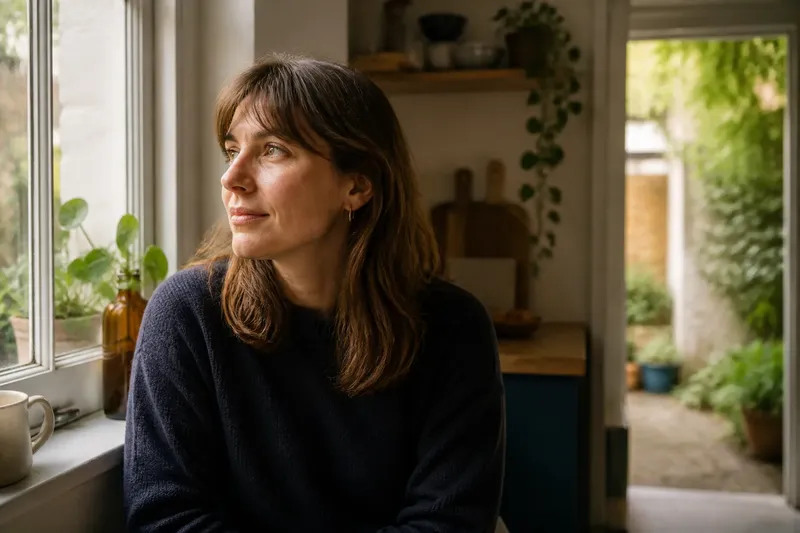
You have a few minutes before a friend leaves, and the room offers a bright window while the doorway opens onto a shaded courtyard. For a quick portrait, window light or open shade is less a technical choice than a choice about how clearly you want to see the face’s direction and surroundings.
Both settings use daylight without direct sun falling on the subject. Window light comes from a nearby opening and usually has a distinct direction. Open shade is a sheltered outdoor area that receives light from the open sky, often with a broader, less obvious direction. Neither is automatically softer or more flattering. The result depends on the size and position of the bright area, nearby surfaces, and the way your subject turns.
What does each kind of light do to a face?
A window acts like a bright source at one side of the room. If the subject faces it, light reaches the front of the face; if they turn slightly away, one cheek may become brighter while the other falls into gentle shadow. That difference can make a portrait feel shaped and attentive. A narrow window or one far from the subject tends to make the direction more noticeable. A broad window close by can give a more even look.
Open shade describes a place protected from direct sunlight but open to a large patch of sky. The light often reaches the face from several directions, so shadows can seem less defined. It can be a useful choice for a relaxed portrait where the background matters as much as the face. Yet shade beside a pale wall may bounce light strongly onto one side, while shade beneath a deep roof can leave the face looking subdued.
Think of the distinction as a tendency, not a rule: window light often makes the direction of light easy to read; open shade often blends into its surroundings. A quick look at the person’s cheeks, eye sockets and the shadow beneath the chin tells you more than the name of the location.
When should you choose window light?
Choose a window when you want a portrait with a clear sense of shape. It suits a quiet, inward mood, or a picture where the face should stand apart from a dimmer interior. A side-on window can bring out the curve of a cheek and the texture of hair or clothing. Turning the subject towards the window softens the contrast across the face; turning them slightly away can make the shadow more pronounced.
Look at the whole window, not only the sunlit patch on the floor. If direct sun is striking the face, the light may be harsher and create sharper shadows than you intended. Moving the person a little farther into the room, or to the side of the opening, can change what reaches them. If the window is behind the subject, the face may look dark against a bright view. A small turn towards the window can bring more light onto the eyes without requiring a different room.
Window portraits also show the room’s colours. A warm-painted wall can tint light reflected onto the face; a white wall may return a paler, more neutral glow. If the colour feels distracting, shift the subject away from that wall or try another window. The point is not to remove every trace of the room, but to notice whether its light supports the expression you want.
When is open shade the better choice?
Open shade is a good candidate when you want a portrait that feels connected to a place: a garden path, a porch, or the sheltered side of a building. The sky supplies broad light, while the surroundings remain visible. This can make the setting feel like part of the person’s everyday life rather than a backdrop chosen for the photograph.
Find shade that still has a view of open sky. A spot deep under a balcony or beneath dense trees may be dark compared with the area behind the subject. That difference can pull attention away from the face or make the background look unusually bright. Moving closer to the edge of the shade often changes the face’s brightness and expression. Keep the person out of direct sun, but let their face have a clear view towards the open area.
Shade can also carry colour from its surroundings. Green leaves may lend a greenish cast, and a nearby brick wall may warm the skin. A shift of a few paces can change the reflected colour. If the colour is noticeable in the live view, turn the subject or find a less colourful neighbour; if it feels true to the place, keep it.
How can you choose in the few minutes you have?
Use a short routine rather than trying to compare every possible position. Give yourself a minute to look, then make one small change at a time. That keeps the exchange easy for the subject and helps you recognise what each setting is doing.
- At the start, name the mood. Decide whether you want a more shaped, intimate portrait or an open, place-based one. Treat this as a preference, not a technical target.
- In the next minute, check the eyes. At the window, ask the subject to face it and then turn slightly. In shade, have them look towards the open sky. Notice where the eyes appear lively and whether the face still looks like them.
- Then inspect the shadow and background. Look at the cheek, under the chin and behind the head. Choose the position where the face reads clearly and the background does not compete.
- Use the following minute to adjust distance and angle. Move the person, not the camera settings, first. A small turn or shift can alter the light more effectively than asking them to hold a strained expression.
- Before you finish, make a pair of portraits. Take one in the chosen position and one after a modest change of direction. Compare the feeling of the face and place, then keep the frame that fits the mood you named.
Say you are photographing a friend beside a kitchen window, but the bright view behind them makes the face seem withdrawn. You ask them to turn towards the glass and take a small step into the room. The expected observable change is a brighter face with a clearer cheek shadow, while the window remains part of the scene. If that still feels too dramatic, you can move to open shade outside and compare whether the softer surroundings better suit their expression.
What should you check before choosing?
Does window light always look more dramatic?
No. A broad, nearby window can illuminate the face quite evenly, while a small opening can produce a stronger directional effect. The subject’s distance and angle matter as much as the window itself.
Can open shade still create a shadow?
Yes. A wall, doorway or bright patch of sky can send more light from one side than another. Look at the face rather than assuming that shade means perfectly even light.
Which setting is easier when the background is busy?
Either can work, but an interior window may let you place a plain wall behind the subject, while open shade may keep a location visible. Choose the setting in which the face is easiest to distinguish from what sits behind it.
What if the person looks tense in both places?
Keep the light choice simple and change the interaction: let them sit, lean against a familiar surface, or look briefly away from the camera. A comfortable posture often matters more to the portrait’s feeling than a perfect patch of light.
How do you keep the choice personal?
After the portrait, notice what you responded to. Perhaps the window’s shadow made a quiet expression feel thoughtful, or the open shade kept a familiar corner of the garden present. That observation gives you a useful preference for next time without turning it into a fixed rule.
For a quick portrait, window light or open shade is best judged by what it does to this face in this place. Start with the mood, watch the eyes and shadows, and make one small adjustment. The most useful choice is the one that lets the person and their surroundings belong in the same photograph.